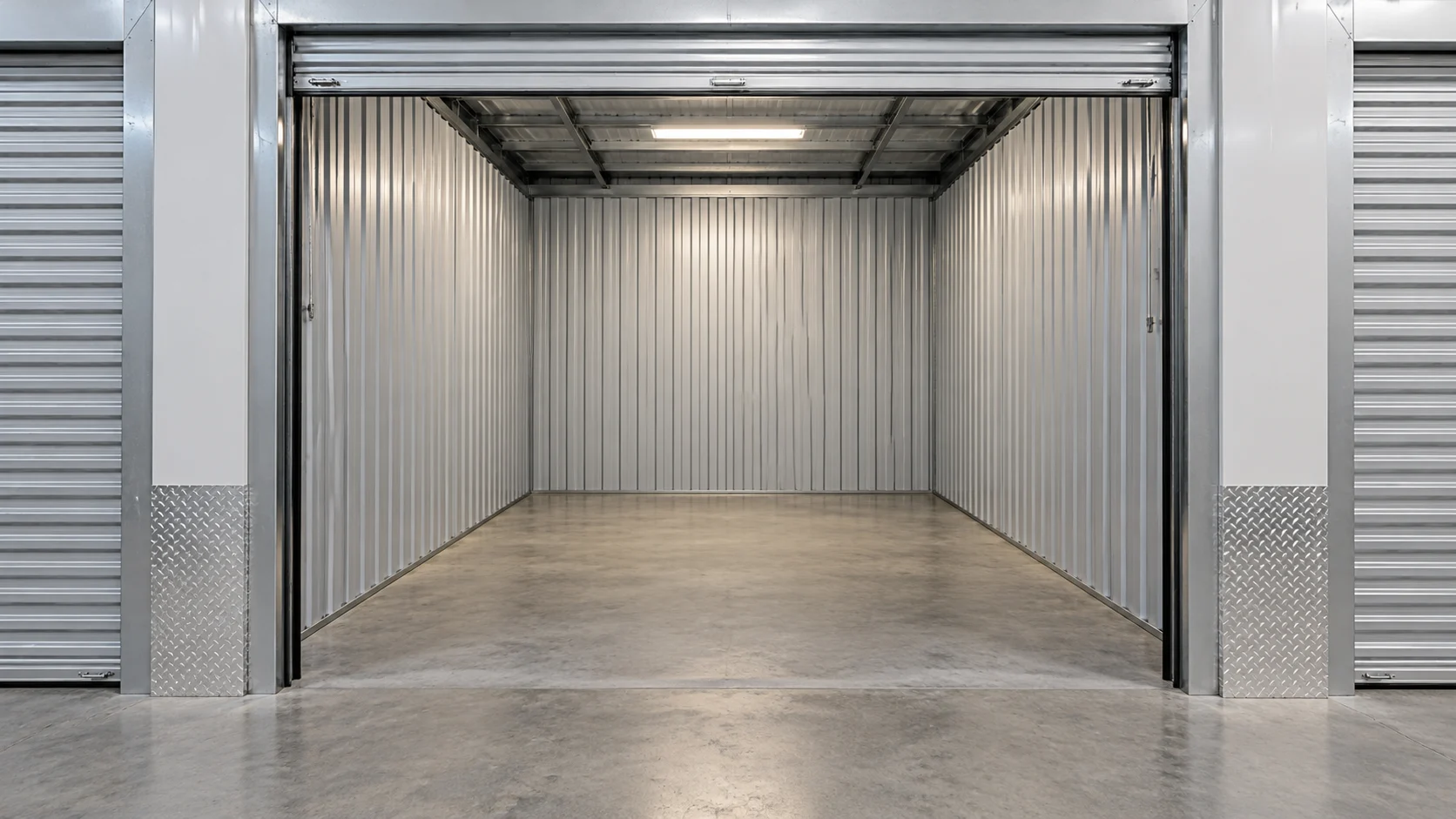
Conceptual visualization · illustrative examples are not market data.
Compare two promises
Climate-controlled and drive-up storage solve different practical problems. The former describes an environmental service inside a building; the latter describes a convenient loading relationship between a vehicle and a unit. Some facilities combine both. Begin by writing the service promise in plain language. Which conditions are controlled? Where does the customer unload? What is the route to the unit? A category label does not answer those questions. The comparison in this article is a framework for investigating options, not a claim that one format earns a superior return.
Trace the customer journey
For an enclosed facility, trace the route from parking through loading, doors, corridors and any elevator. Consider how two customers pass each other with carts and what happens if an elevator is unavailable. For a drive-up concept, trace the vehicle turning route, the space needed to open doors and the route back to the exit. Examine rain, snow, lighting and gate queues. A concept can appear efficient in a unit schedule while creating friction in the actual journey. The Studio should keep non-rentable space visible for this reason.
Describe the environmental system accurately
Avoid treating climate control as a universal specification. Heating, cooling, ventilation and moisture management are distinct functions, and the design needs to match the stated service. Define monitoring locations and the response to an out-of-range reading. Ask how doors, loading operations and the building envelope affect the system. A customer may assume broader protection than the equipment provides unless the rental information is clear. Obtain specialist design and maintenance advice for the actual premises; an illustrative floor plan cannot establish the suitability of goods or a guaranteed storage condition.
Compare complete cost structures
For the enclosed option, examine the envelope, systems, corridors, loading and vertical movement. For the drive-up option, examine land consumption, roads, drainage, exterior doors and seasonal site work. Use local quotes for both instead of transferring a generic construction rate between formats. Then compare recurring staffing, utilities, maintenance and insurance on the same time basis. In an illustrative comparison, additional revenue of C$2,000 a month would not justify additional operating costs of C$2,500 a month before even considering the extra capital. Those figures demonstrate arithmetic, not a market premium.
Let evidence shape the choice
Collect comparable offers with dimensions, advertised rates, concessions and service details. Ask prospective customers which features matter and what alternative they would use. Test both concepts with conservative occupancy and realistic opening delays. If the decision depends on a rate premium, make that assumption explicit and investigate it directly. Compare physical constraints and the ability to change the unit mix later. Record why a format is selected and what evidence would cause a revision. A hybrid can be worth studying, but it adds interfaces and should be assessed as its own operating concept.