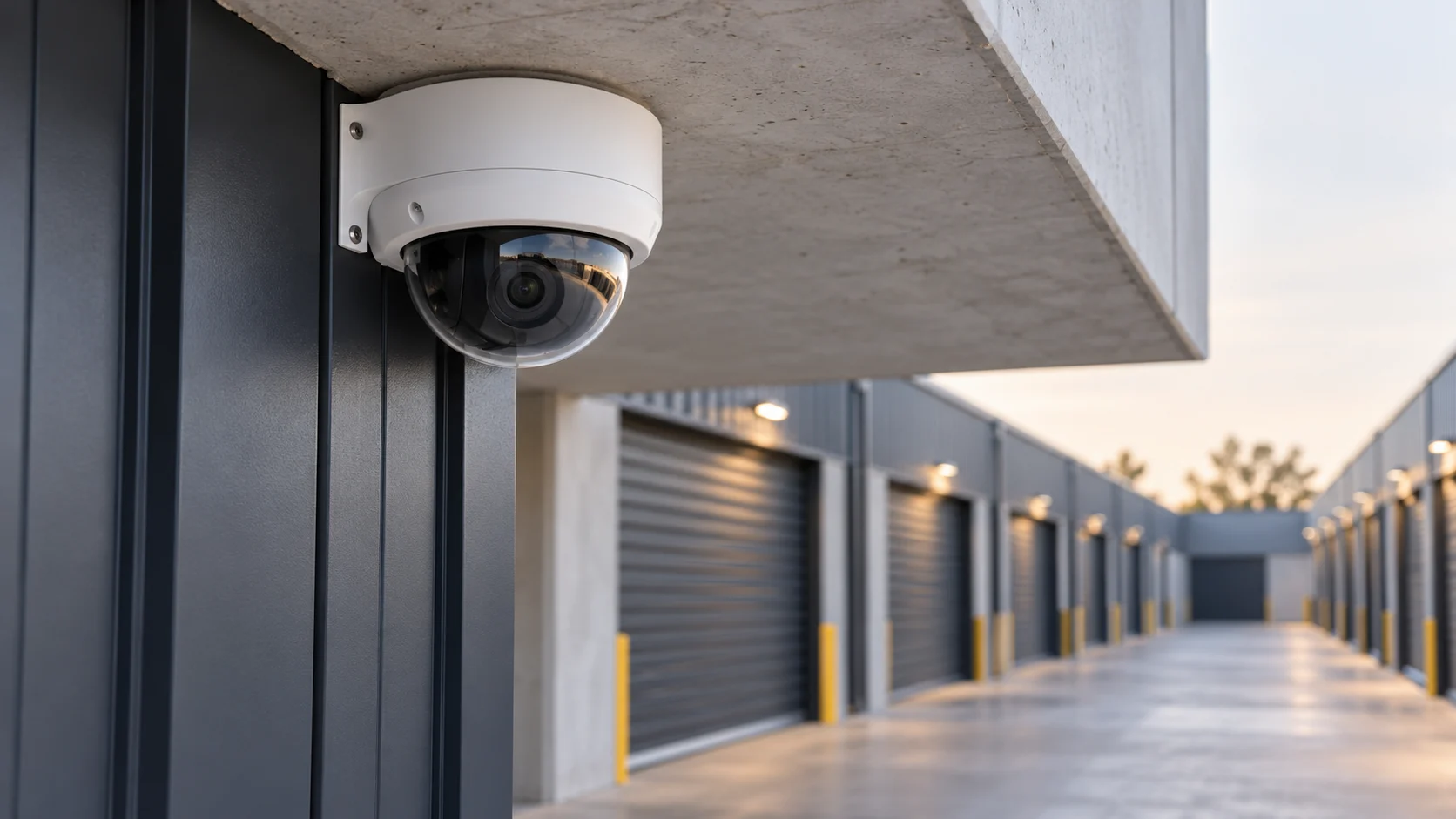
Conceptual visualization · illustrative examples are not market data.
Start with the operational problem
A security specification should begin with the events the operator needs to prevent, detect and respond to. Map the customer route, staff route, delivery area and restricted spaces. Ask who needs access, at what times and under whose authority. A camera, gate and lock solve different parts of the problem. Buying more equipment does not automatically resolve a poor process. This article provides a planning framework for a conceptual facility; it does not disclose real access codes or claim that any system can eliminate theft or other loss.
Manage credentials throughout their life
Document how a credential is issued, changed and revoked. Account for shared business users, staff departures, lost devices and emergency access. Define who can approve a change and how that approval is recorded. Test what happens during a power or network interruption and how the operator returns to normal service. Avoid publishing detailed bypass procedures in public-facing materials. Ask vendors about support arrangements, updates and the ability to export essential records if a service is replaced. Cost comparisons should include recurring subscriptions and the staff time needed to administer exceptions.
Use cameras with a defined purpose
The OPC's overt-surveillance guidance asks businesses to consider less intrusive alternatives, define the reason for surveillance, limit collection, inform people and protect recordings. It addresses public surveillance in publicly accessible private-sector areas, not every possible workplace or covert use. For a proposed facility, record the purpose of each camera and seek appropriate privacy advice. A wide field of view is not automatically the right field of view. Treat signage, access to footage and retention as part of the system design rather than as paperwork to add after installation.
Design the response, not just the alert
An alert is useful only if someone can interpret it and act appropriately. Define who receives a gate fault, out-of-hours event or equipment warning, what information they need and how escalation works. Include false alarms, planned maintenance and communications failure in the operating procedure. Keep a record of incidents and corrective actions so recurring faults are visible. Service-level language should match the actual staffing arrangement. A remotely managed facility still needs a credible way to handle a stuck gate, a customer locked out or a condition that requires an on-site response.
Budget and test the whole system
Request an itemized proposal covering installation, connectivity, software, maintenance, replacement and support. Plan commissioning tests using authorized scenarios and document the results. Ensure essential customer journeys remain accessible to people who cannot use a particular phone or interface. Review personal-data flows with the actual service providers and hosting locations. Compare a simpler well-supported arrangement with a more complex one on operational reliability, not feature count alone. The Explorer connects each system with its purpose and cost category; a real procurement needs project-specific technical, privacy and insurance review.
Checked 2026-10-27 · Overt surveillance of the public in publicly accessible areas; not employee or covert surveillance.OPC — Privacy Guide for Businesses ↗
Checked 2026-10-27 · Federal and provincial private-sector privacy framework.